I’ve wanted a dog for as long as I can remember. But between traveling constantly before van life and not having the right setup, it never quite fit into our plans. Van life changed that equation completely. Suddenly, the idea of having a hiking companion who could travel with us everywhere felt not just possible, but perfect.
The moment it really clicked was in May 2025 during a trip to Page, Arizona with my best friend Erica. We were kayaking through the canyons when we saw someone paddling with their dog just chilling on the kayak like it was the most natural thing in the world. Ethan and I looked at each other and just knew. It was time.
Fast forward to July, and we were leaving Chicago after an incredible weekend with friends, about to embark on a 14-hour journey that would change our lives forever. We were going to pick up our puppy.
Why a Brittany?
Once we decided we were ready for a dog, we got serious about research. We knew exactly what we needed: an active dog that could hike miles with us, medium-sized to fit comfortably in the van, and ideally low-shedding. We didn’t want a designer breed, and we were committed to finding a responsible breeder, not a backyard breeder.
I’m a big proponent of “adopt don’t shop,” but here’s the thing: there’s a right way to shop if you’re going to do it. The issue isn’t responsible breeders who health test, provide documentation, and genuinely care about their dogs and the breed. The issue is backyard breeders who are in it for profit without regard for the dogs’ wellbeing. If you’re going to go the breeder route, you need to do your due diligence. If you’re not willing to put in that work, stick to adopting. These dogs deserve better from us.
After researching breeds that fit our lifestyle, Brittanys kept coming up. They’re the perfect size, incredibly smart, athletic enough to keep up on long hikes, and have amazing personalities. We started looking for breeders and found Cross Creek Brittanys through multiple Reddit posts. Dr. Barbara, who runs the breeding program, is a vet herself and has been doing this for several years. When we talked to her and looked at their website, everything felt right. They had all the documentation, health testing on the parents, and were genuinely invested in matching puppies with the right families.
We filled out our application and waited for the right litter to come along. When we found out we’d be in Chicago at the end of July, I started looking at breeders in the area. Cross Creek is in southern Indiana, close to the Louisville border, and after all that Reddit research confirming how great they were, we knew this was meant to be.
The Journey Begins: Chicago to Indiana
Saturday night in Chicago, we had our farewell dinner with Alex, Dan, Kevin, Leah, and two of Alex’s friends at Quartino. It was the perfect send-off meal, but we couldn’t stay late. We had a puppy waiting for us.
We left around 7pm and drove about three hours before stopping for the night at a Cracker Barrel about an hour away from Cross Creek Brittanys. We were way too excited to sleep much. We woke up at 7am even though our pickup wasn’t until 9am. We needed time to eat breakfast and mentally prepare for the fact that we were about to become dog parents.
That final hour-long drive to the breeder felt endless. The anticipation was almost too much to handle.
Meeting Rooster (And a Small Mix-Up)
When we arrived at Cross Creek, Randi, one of Dr. Barbara’s employees, brought out a puppy. But the second we saw him, we knew something was off. The puppy we’d been looking at online had a bigger spot on his coat, and this wasn’t him.
We spoke up immediately and explained the mix-up. Turns out the photos on the website had gotten switched around. Thankfully, no one else had claimed the puppy we wanted, so Randi went back and brought out the right one.
The moment we saw him, we knew. This was our boy. This was Rooster.
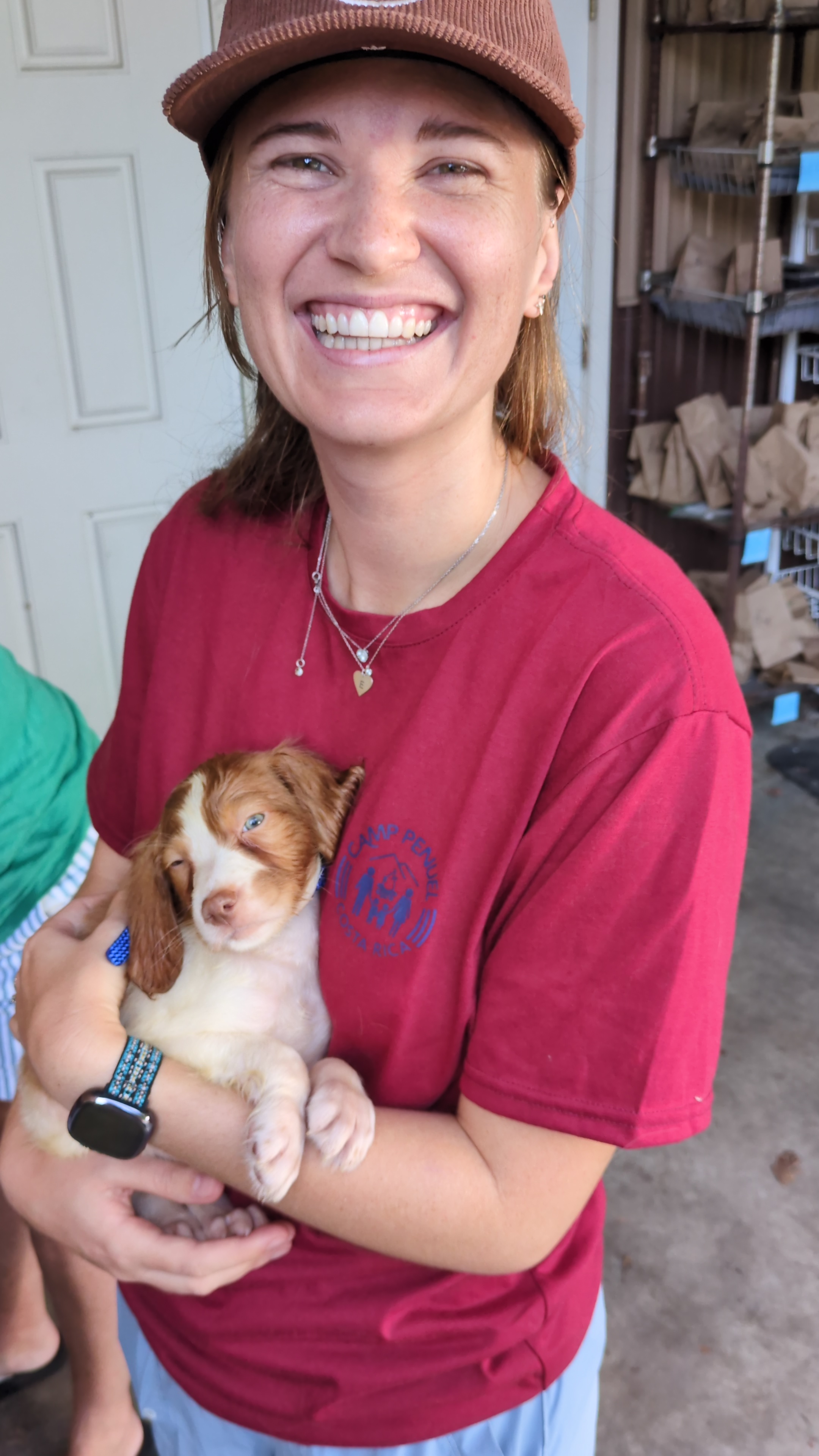
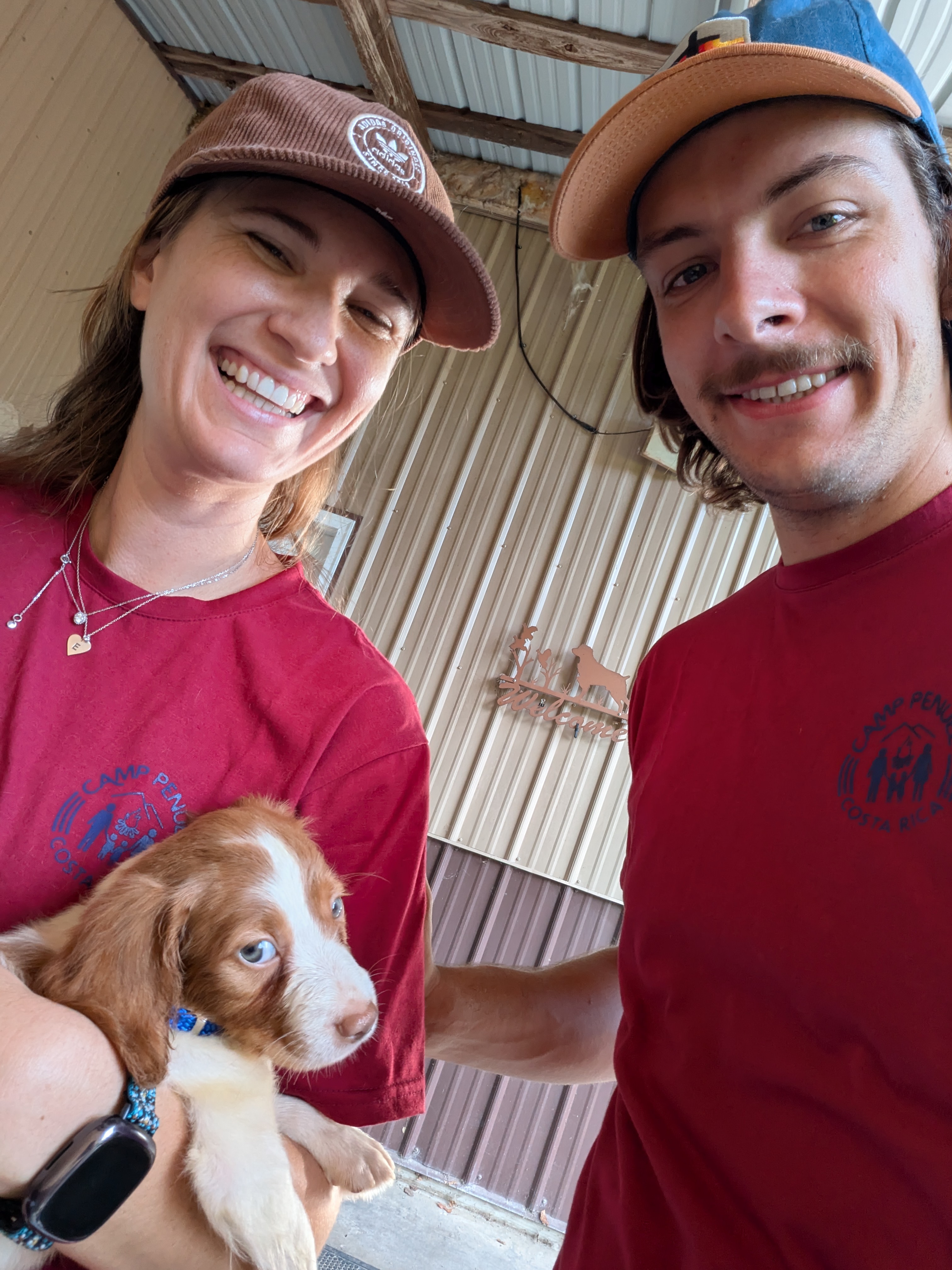
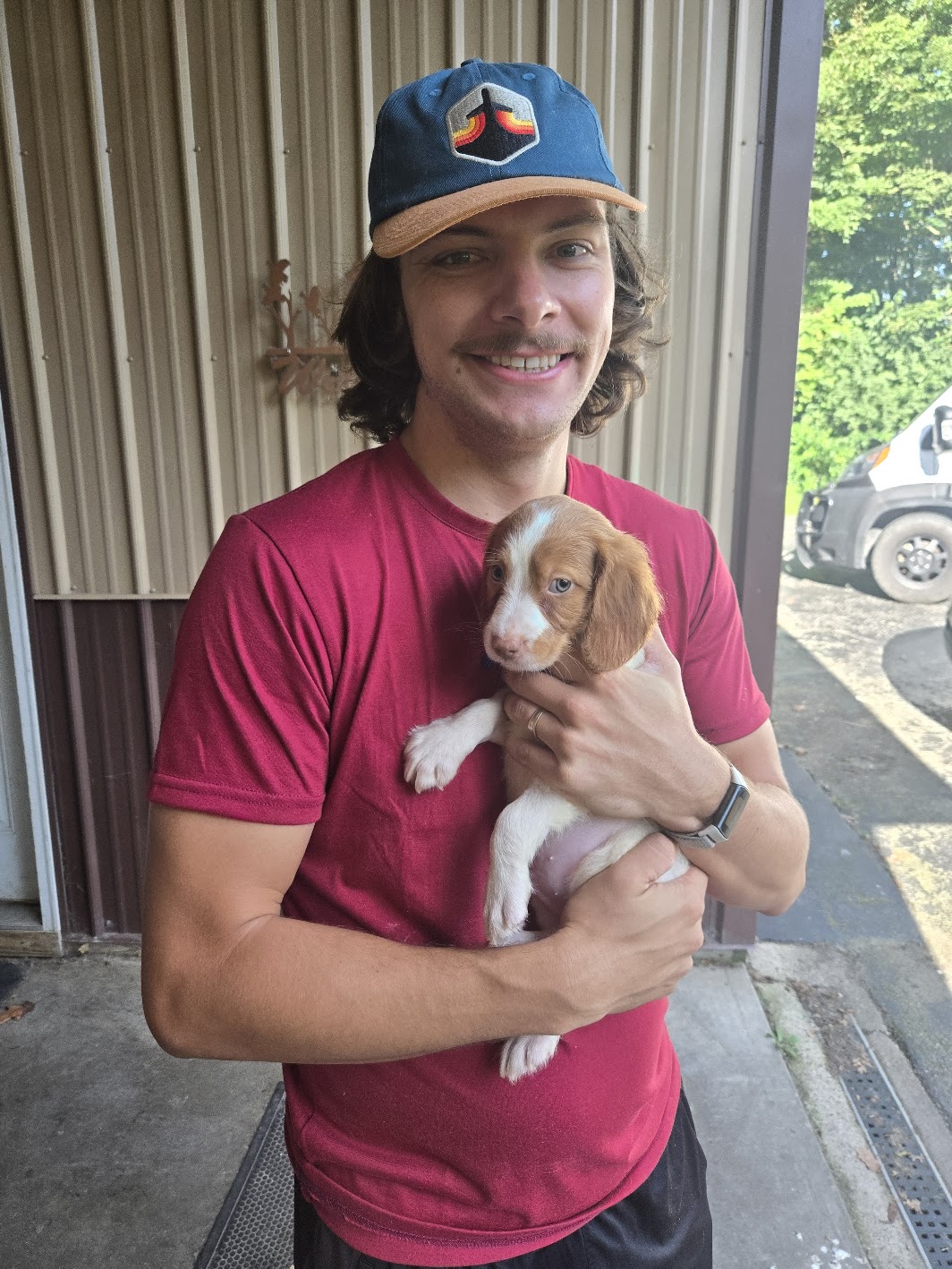
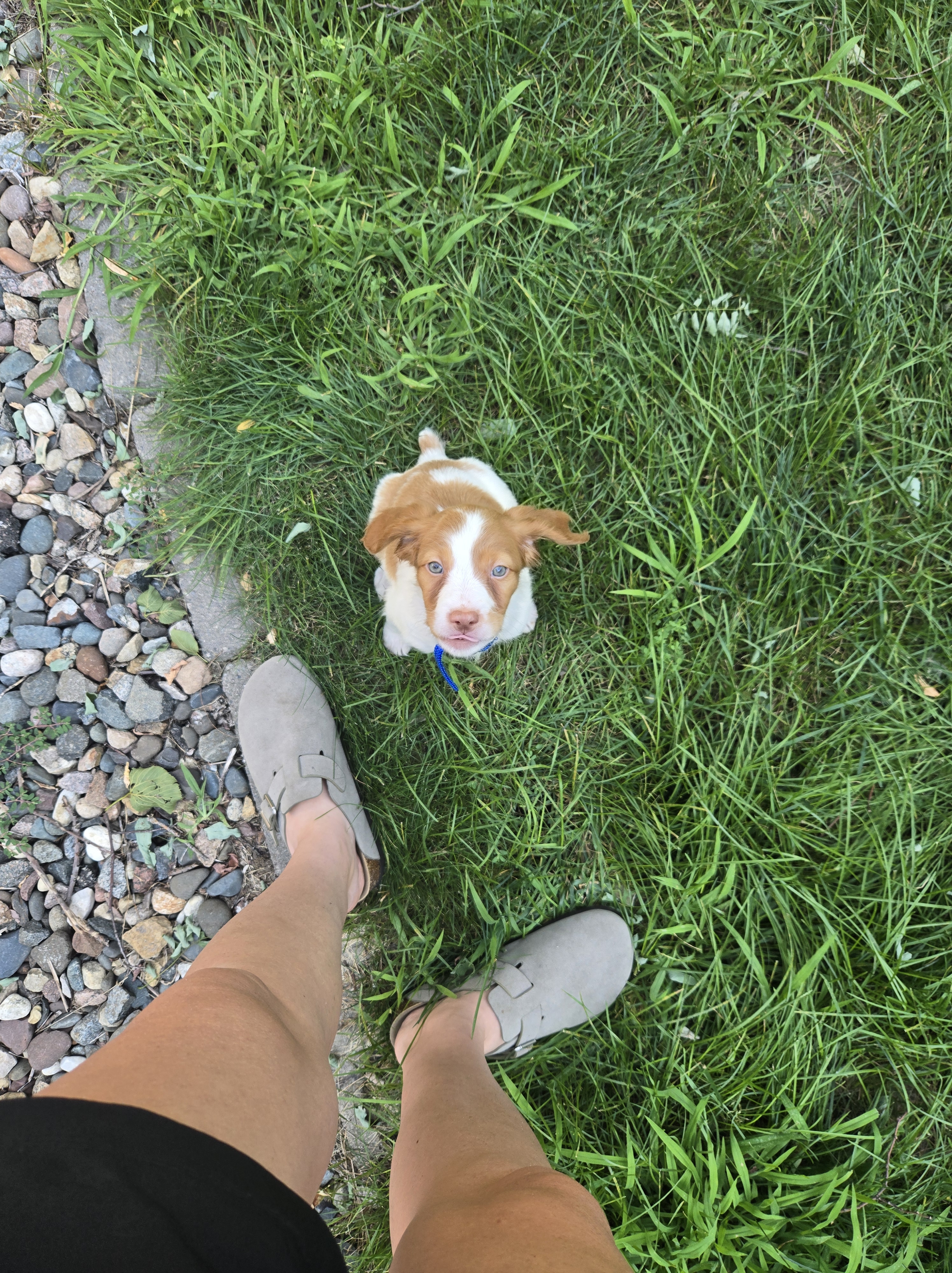
He was barely five pounds, just this tiny little thing, but he was already so calm and confident. He warmed up to us immediately, snuggling into my arms like he’d known us his whole life. Dr. Barbara told us he was brave and playful, which honestly felt like an understatement. He was perfect.
We signed all the paperwork, got his health records and vaccine documentation, said our goodbyes, and loaded our new baby into the van. We had a 14-hour drive ahead of us to St. Paul, where we’d be staying with Ethan’s aunt for the week.
The 14-Hour Road Trip (Featuring Five Separate Poops)
Rooster fell asleep in my arms almost immediately. He slept for most of the drive, which we thought was a miracle. A calm puppy on his first road trip? We were so lucky!
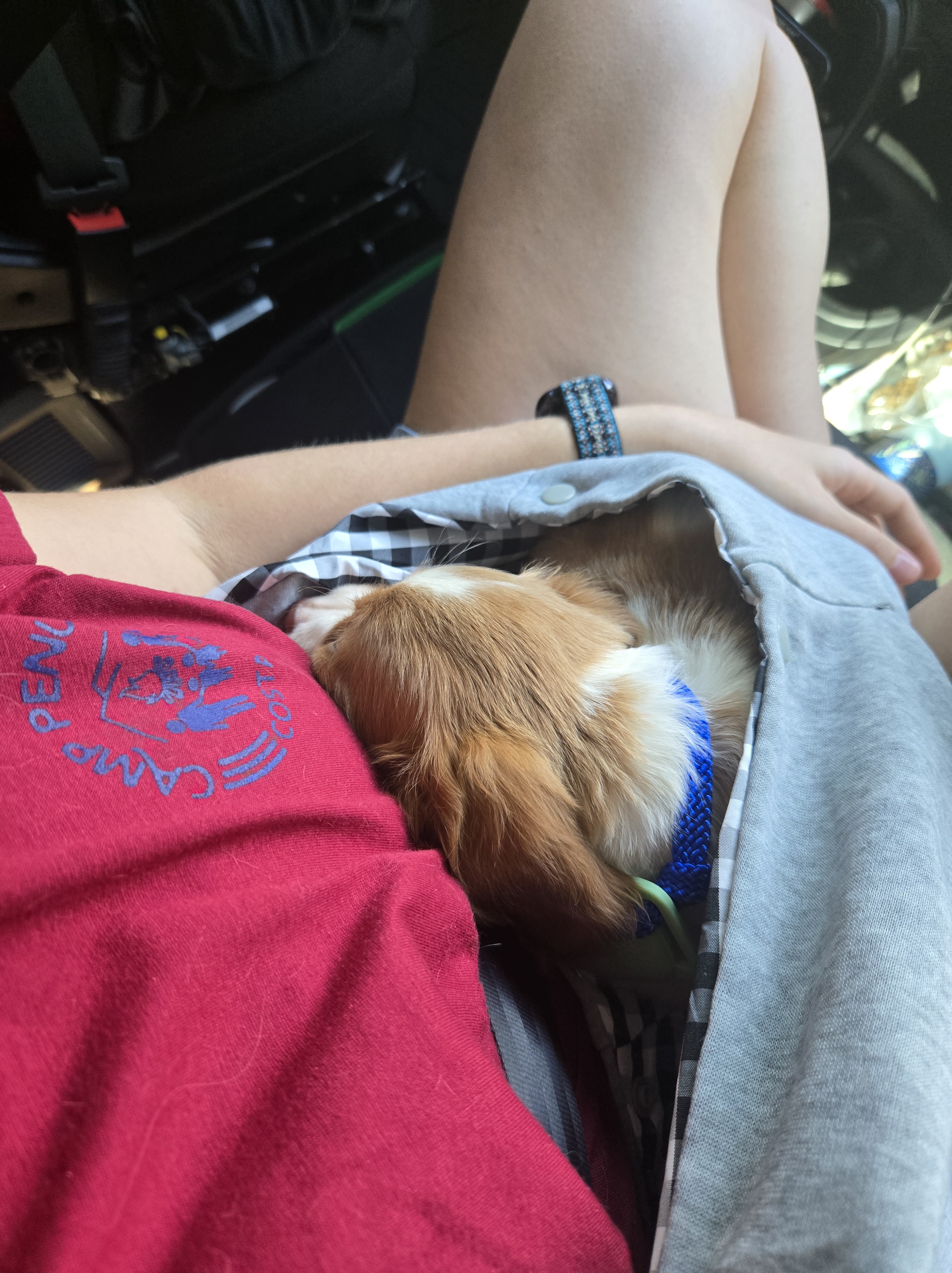
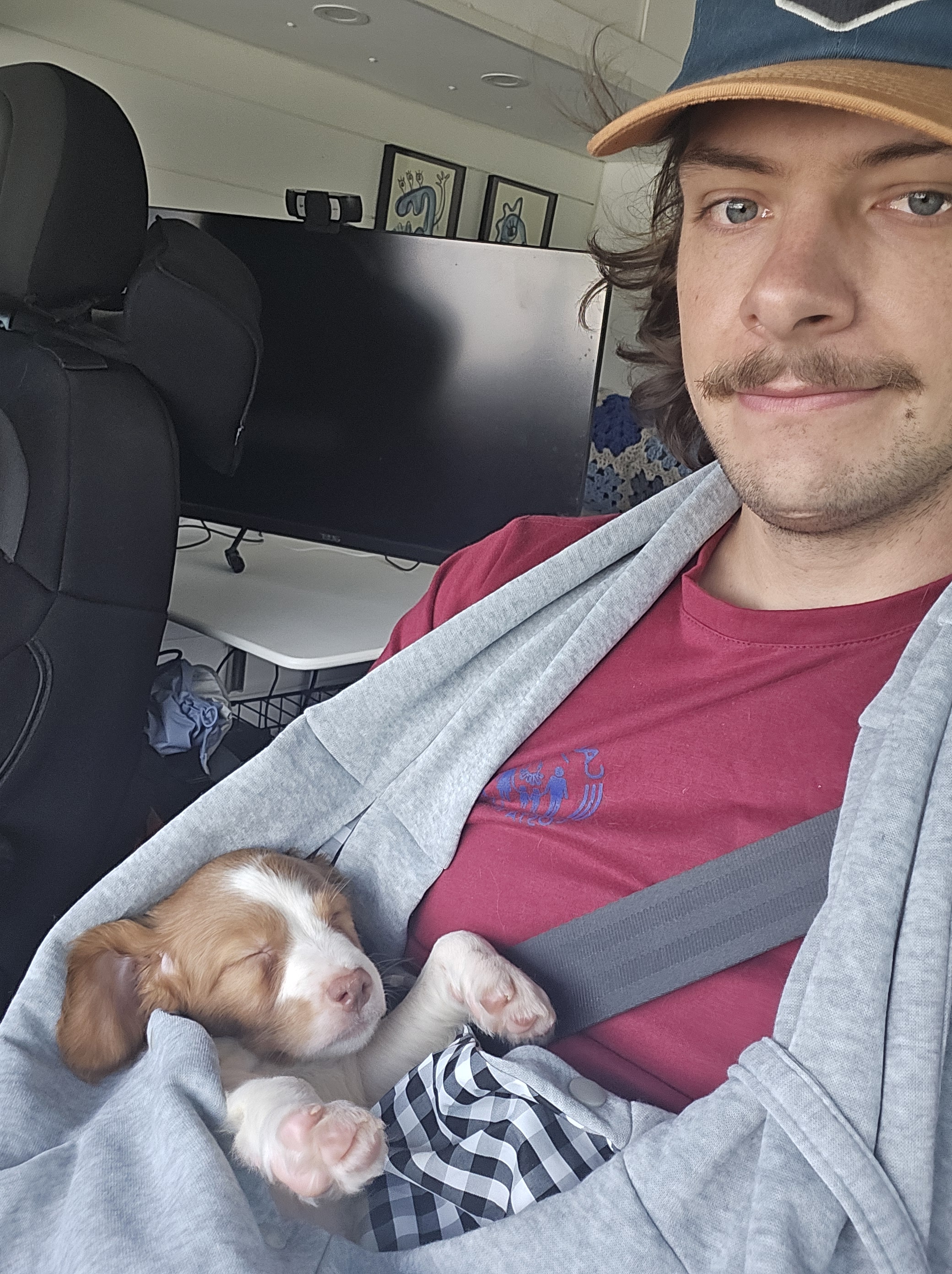
Except for one small detail: he pooped. Five. Separate. Times.
No matter how many times we stopped, no matter how much we tried to let him do his business outside, this puppy had a mission. He was going to christen the van properly, and nothing was going to stop him.
Did we have regrets? Not even for a second. We were completely in love.
Ethan and I took turns driving so we could both get puppy cuddle time. Every time we looked at this tiny ball of fluff sleeping in our arms, the poop incidents didn’t matter at all. We were a family now.
The First Night Reality Check
We arrived at Ethan’s aunt’s house late that night, exhausted but thrilled. We’d done our research on puppy training and knew we wanted to start kennel training immediately. We had a crate set up and ready to go.
That first night was the hardest.
Here’s what we learned the hard way: you need to make the kennel smaller when they’re tiny. If the crate is too big, they’ll just poop or pee in one corner and sleep in the other. Which is exactly what happened to us that first night. We woke up to a mess and a very confused puppy.
We adjusted the crate size the next day, and things got much better. But I’m not going to lie, that first week was rough. Kennel training is absolutely worth it in the long run, but those first few nights are an adjustment for everyone.
Van Life with a Puppy: The First Week
We spent the next week and a half at Ethan’s aunt’s house, which turned out to be perfect timing for having a new puppy. Having a backyard made potty training so much easier than it would have been if we’d jumped straight into full-time van life.
We focused on getting Rooster used to his actual home (the van) rather than getting comfortable in someone else’s house layout. We also started working on introducing him to Mav and Goose. That’s still a work in progress, if we’re being honest, but we’re getting there.
The biggest adjustment? Just wrapping our heads around the fact that we had a puppy. A living, breathing, pooping creature who depended on us completely. We took turns driving on trips so we could both spend time with him. We planned our days around his needs. Our whole world shifted, and honestly, we couldn’t believe how lucky we were.
Rooster is so smart and has such an amazing personality. Looking back, nothing about adding him to van life surprised us in a bad way. He just fit. He was always meant to be part of our family.
What You Should Know About Responsible Breeding
Since we went the breeder route, I want to share what we learned about finding a responsible breeder versus a backyard breeder. This information could help you make an informed decision if you’re considering getting a puppy.
What Makes a Breeder Responsible?
Health Testing: Responsible breeders do comprehensive health testing on parent dogs. Cross Creek provided complete health certificates and genetic testing results for both parents. This isn’t just paperwork, it’s proof they’re breeding healthy dogs and working to eliminate genetic diseases from their lines.
Documentation: We received Rooster’s full pedigree, health records, vaccination history, and information about both parents’ temperaments and health backgrounds. A good breeder will have all of this ready and be eager to share it.
Breed Knowledge: Dr. Barbara knew everything about Brittanys. She could tell us about the breed’s history, common health concerns, training needs, and what to expect at different life stages. She wasn’t just selling puppies, she was genuinely invested in the breed.
Lifetime Support: Responsible breeders stay in touch. They want updates on how the puppies are doing and are available for questions and support throughout the dog’s life. They also typically have a contract requiring you to return the dog to them if you can ever no longer care for it, rather than surrendering to a shelter.
Limited Breeding: They don’t have litters constantly. Responsible breeders carefully plan breedings to improve the breed and only breed dogs when they have waiting families.
Transparency: Good breeders will ask YOU lots of questions. They want to make sure their puppies are going to the right homes. If a breeder isn’t asking about your lifestyle, living situation, and experience with dogs, that’s a red flag.
Red Flags to Watch For
No Health Testing: If a breeder can’t provide health certificates and genetic testing results for the parents, walk away.
Multiple Breeds: If someone is breeding several different breeds, they’re running a puppy mill or backyard breeding operation, not focusing on improving specific breed lines.
Always Have Puppies Available: Responsible breeders have waiting lists. If they always have puppies ready to go, that’s a huge red flag.
Won’t Let You Visit: You should be able to see where the puppies are raised and meet at least the mother. If they’re hesitant about visits or want to meet somewhere else, something’s wrong.
Pressure to Buy: A good breeder isn’t desperate to sell you a puppy. They’re trying to find the right match between puppy and family.
No Questions Asked: If they don’t ask you detailed questions about your lifestyle and living situation, they don’t care where their puppies end up.
Can’t Provide References: Responsible breeders should be able to provide references from previous puppy buyers and their veterinarian.
Why Responsible Breeding Matters
Responsible breeding actually helps dogs in multiple ways. It reduces genetic health problems through careful selection and health testing. It ensures puppies are properly socialized from birth, which affects their behavior for life. It maintains breed characteristics that people rely on for specific purposes (like Brittanys being great hiking companions). And it reduces the number of dogs that end up in shelters because they were poorly bred, unsocialized, or placed in wrong homes.
Backyard breeders and puppy mills, on the other hand, contribute directly to dog overpopulation, genetic health problems, and behavioral issues that lead to shelter surrenders.
The Bottom Line
If you’re considering getting a dog from a breeder, do your homework. Don’t be afraid to ask lots of questions. If a breeder is hesitant or holds back information, they’re not the right fit. Visit in person if possible. Ask for references. Check that all health testing is current and complete.
And if you’re not willing to put in the work to find a truly responsible breeder? Please adopt instead. There are amazing dogs in shelters and rescues who deserve homes too.
We’re incredibly grateful we found Cross Creek Brittanys and that Dr. Barbara helped us find Rooster. The care and attention they put into their breeding program gave us confidence that we were getting a healthy, well-socialized puppy who was set up for success from day one.
Welcome Home, Rooster
That July day changed everything. Our family of four became a family of five. Our van got a little more crowded and a lot smellier (thanks to those five poops). Our adventures got more complicated but infinitely more fun.
Rooster was always meant to be ours. From that moment we saw the dog on the kayak in Page, to finding Cross Creek, to speaking up about the photo mix-up and getting exactly the right puppy, everything lined up perfectly.
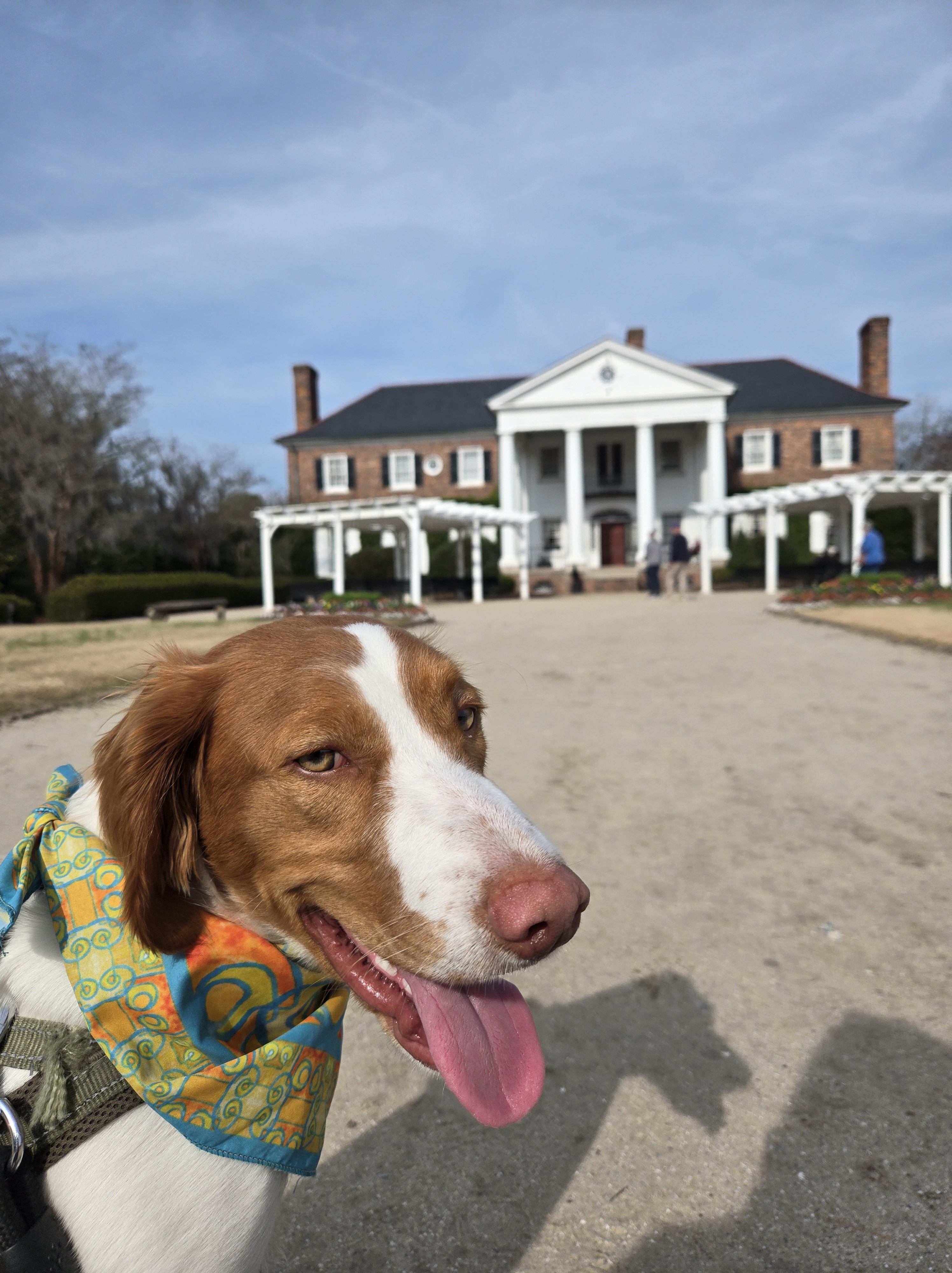
Looking back on that 14-hour drive with a tiny puppy in our arms, all I can think is how lucky we are. We got our adventure buddy, our hiking companion, and our goofy, brave, perfect little Brittany.
Welcome to the family, Rooster. We couldn’t imagine life without you now.

 Wandering with Charlotte
Leave a comment